The Illusion of Freedom in the Age of Total Connectivity
We believed connectivity would make us freer. Instead, we are free to act only within the bounds of engineered attention — the leash is invisible, but no less binding.
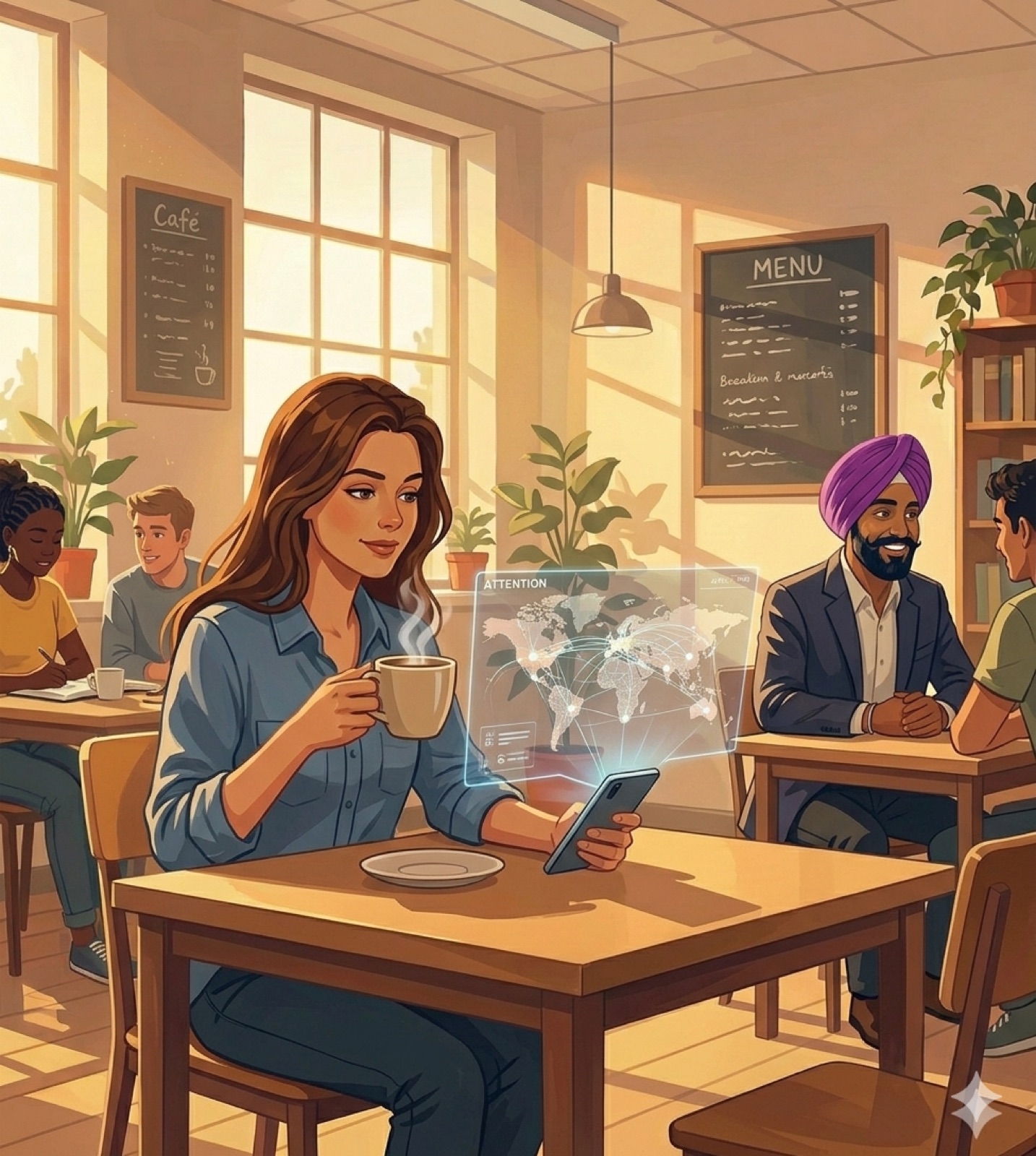
We may be the first generation to mistake connection for freedom.
Throughout history, technology has not been neutral—it has been a lever of control. Its earliest forms were martial: in 919, the Wuyue fleet used "fire oil" to burn rival ships, a precursor to gunpowder warfare. In 1945, the atomic bomb did more than end a war—it signaled that technological supremacy could reorder global power overnight.
Yet the most lasting power of technology has not been in destruction but in shaping minds. The printing press fueled the Protestant Reformation, reshaping Europe's religious and political order. Radio in the 20th century forged national identities. Television blurred public history and private memory, making fictional towns like Mayberry or Malgudi feel more vivid than the places people actually lived.
The web was hailed as liberation: knowledge without gatekeepers. But its economics hollowed out local journalism and replaced editorial judgment with algorithms. A single viral event—the killing of Cecil the Lion—could consume more global attention than any nearby crisis. In the last two decades, mobile networks have spread faster than clean water or healthcare. A child with a smartphone can reach the world, but the world can just as easily reach that child—politically, commercially, emotionally.
This asymmetry is the real frontier. Human society adapts slowly, but tools to manipulate and distract adapt instantly. Today's sovereignty lies less in armies than in infrastructure. Undersea cables and satellite constellations—Facebook's 50,000-kilometer Project Waterworth, Starlink's 7,600 satellites, China's 13,000-strong SatNet, Amazon's Project Kuiper—are not just conduits of connectivity. They are territorial claims over the human attention span.
And yet, as communication expands, choice contracts. Governments that promote cheap data also lead the world in internet shutdowns. Democracies debate whether history itself is "too divisive" to display. Platforms built for open speech now specialize in weaponized memes and echo chambers.
We believed connectivity would make us freer. Instead, we are free to act only within the bounds of engineered attention. The leash is invisible, but no less binding.
Originally published in The Digital Economist Global Fellowship Newsletter, January 2026